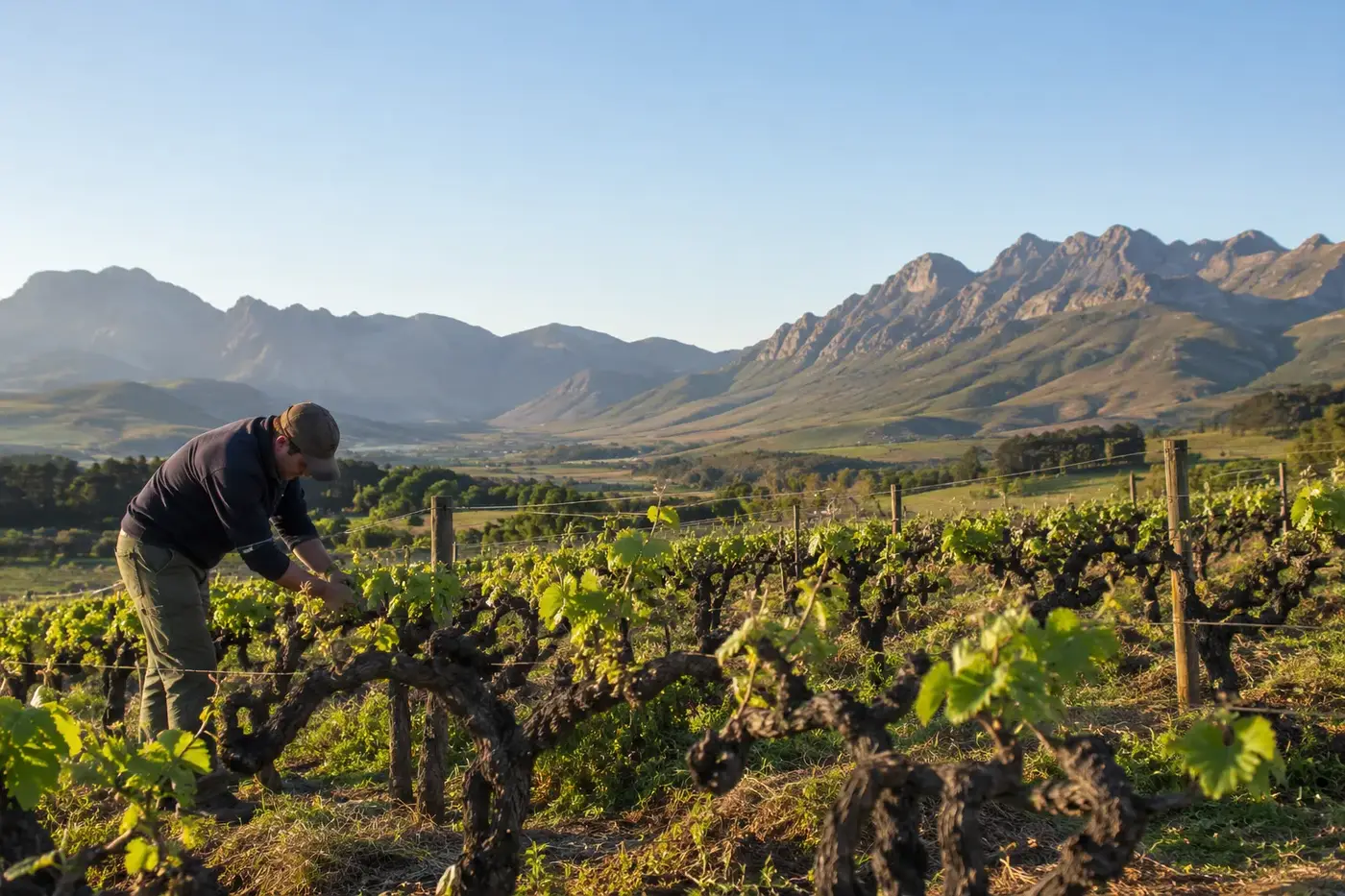
The block we all call the old block was planted in 1978, more than thirty years before we got here. When we bought this run-down farm in 2011 most of the vineyard needed replanting, and that block did not. It had survived on its own terms, and it has set the pace of our farming ever since.
The Oldest Block on the Farm
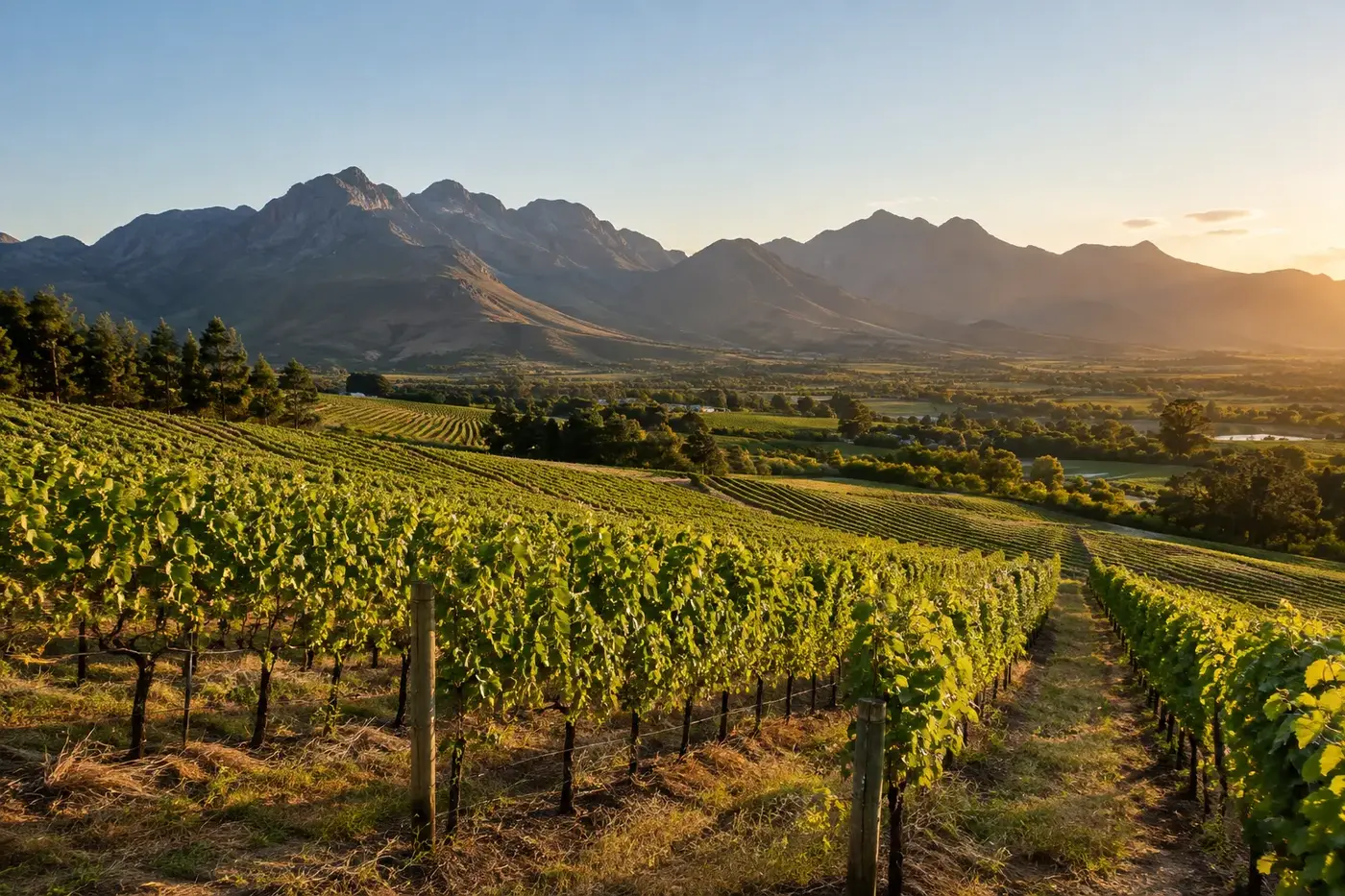
Swaelkloof runs to 38 hectares on the slopes above Franschhoek, 22 of them under vine between 280 and 420 metres. The 1978 Chenin Blanc sits in that band as bush vines: no wires, no trellis, every plant standing on a short thick trunk with its arms held out over the soil. A young trellised vine wants to run. These ones want to hold on.
Why It Has to Be Hands
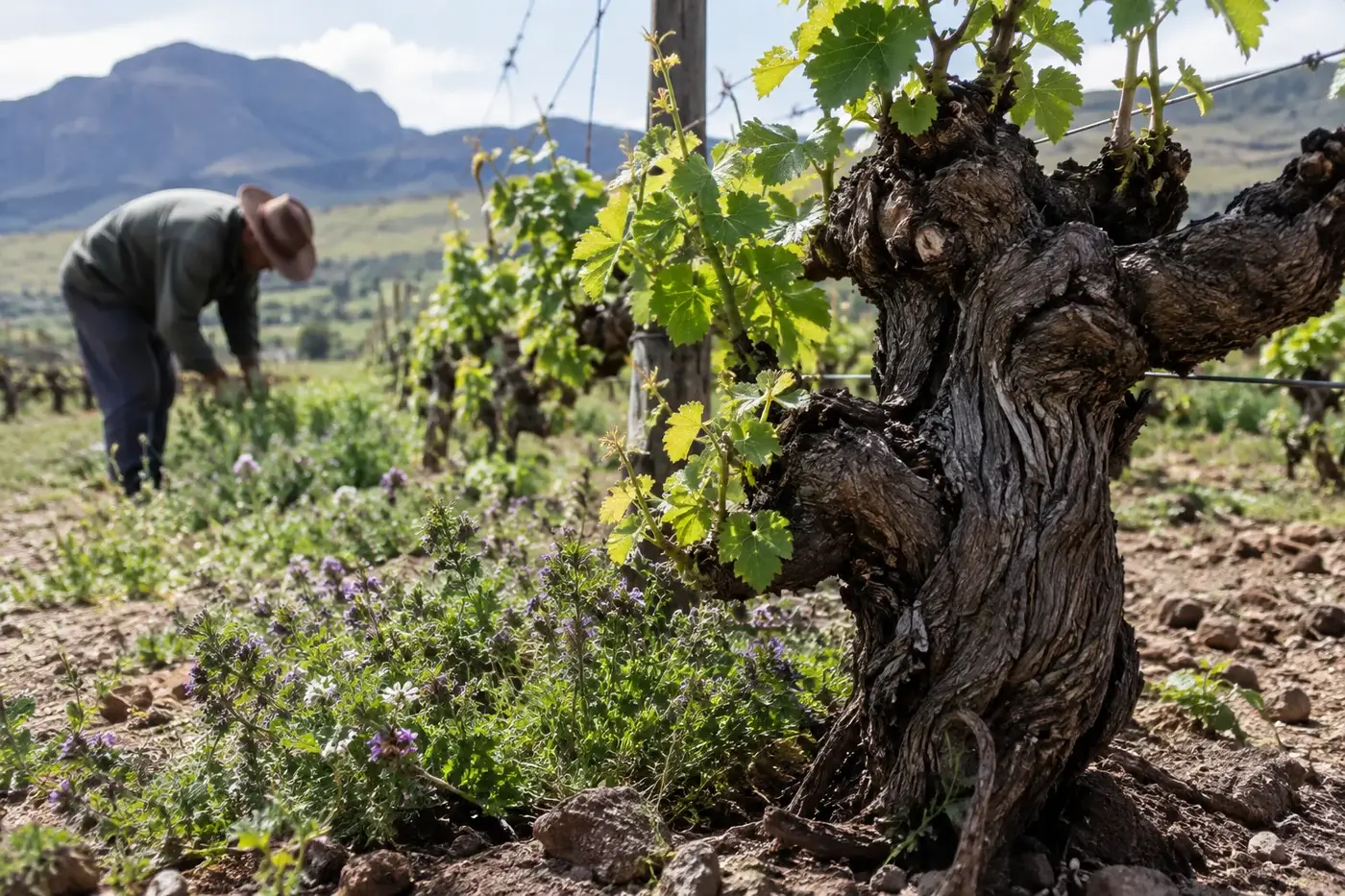
You cannot farm a block like this from a tractor seat. There are no straight wires to follow and no two vines the same shape, so every cut in winter is a decision about that one plant: which arm carries the crop this year, which one is tired, how much wood to leave behind. We prune by hand, we sucker by hand, and we pick by hand into small crates, early in the morning while the fruit is still cold.
It is slower and it costs more than farming the young blocks. It is also the only way this block stays alive, and after a decade and more of it we have stopped arguing about the cost.
“Old vines do not ask us to do much. They ask us not to get in the way.”
Cover Crops, No Herbicides and the Ducks
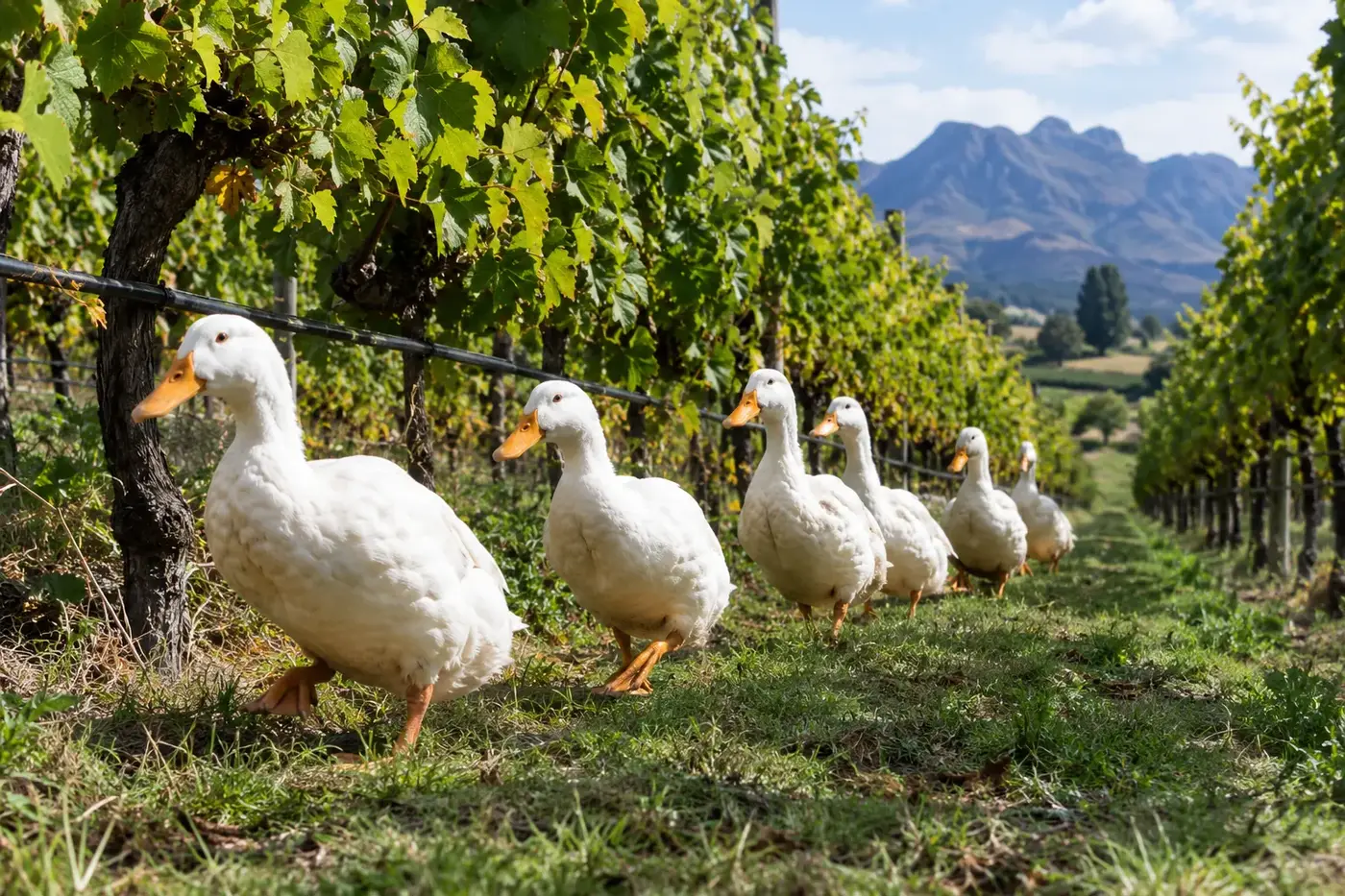
Between the rows we sow cover crops and let them do the work a spray would otherwise do: hold the soil through the winter rain, feed it when we knock it flat in spring, keep the ground cooler into February. We use no herbicides anywhere on the farm. The snails are handled by a flock of ducks that walks the rows in a line, thoroughly, and puts nothing into the soil we would rather not have there. That way of farming is what the Cape Green Farming Award recognised in 2024, and it started in this block because this block gave us no other choice.
What Age Does to the Taste
Old vines carry less. The roots are deep, the canopy is modest and the bunches are small and loose, so the crop off 1978 is a fraction of what a young block gives us in the same season. What comes in is concentrated without being heavy: firm acid, a quiet weight through the middle, and more of the slope than of the variety. Chenin Blanc off vines this age tastes of quince and honey and finishes long and bright, and nothing we do in the cellar will put that into young fruit.
Where It All Goes
Every drop of the block goes into one wine, the Old Vine Chenin Blanc, R195 a bottle at the cellar door. The 2023 took Gold at the Franschhoek Valley Chenin Challenge in 2025, which was a good week for a block that has been doing this since before either of us farmed. The 2024 is pouring now on the Classic Tasting.
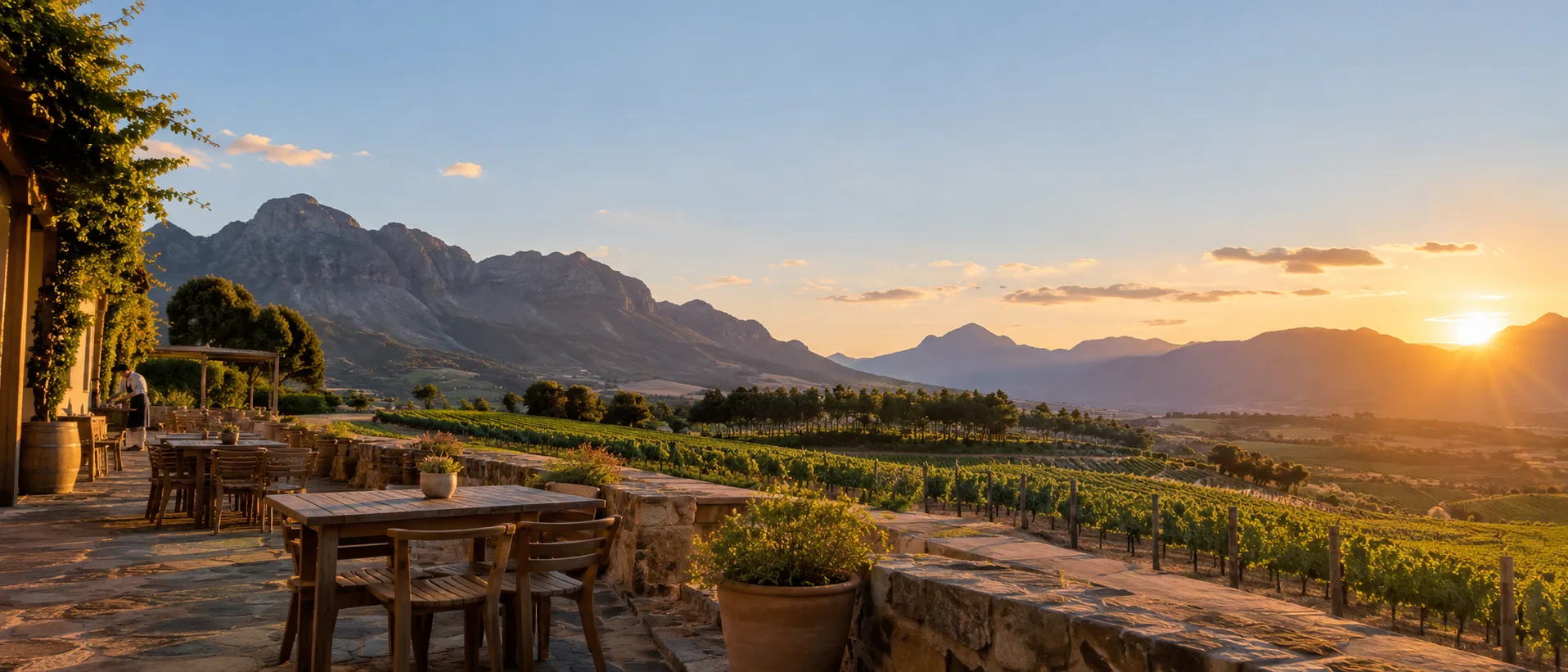
If you would like to see the vines themselves, come up on the Cellar Tour and Barrel Tasting at 11:00 or 15:00, and ask Anele to pour the Chenin next to the Semillon so you can taste what the age does. The story of how we found the farm is on Our Story.
Johan Visagie, Viticulturist, Swaelkloof Wine Estate